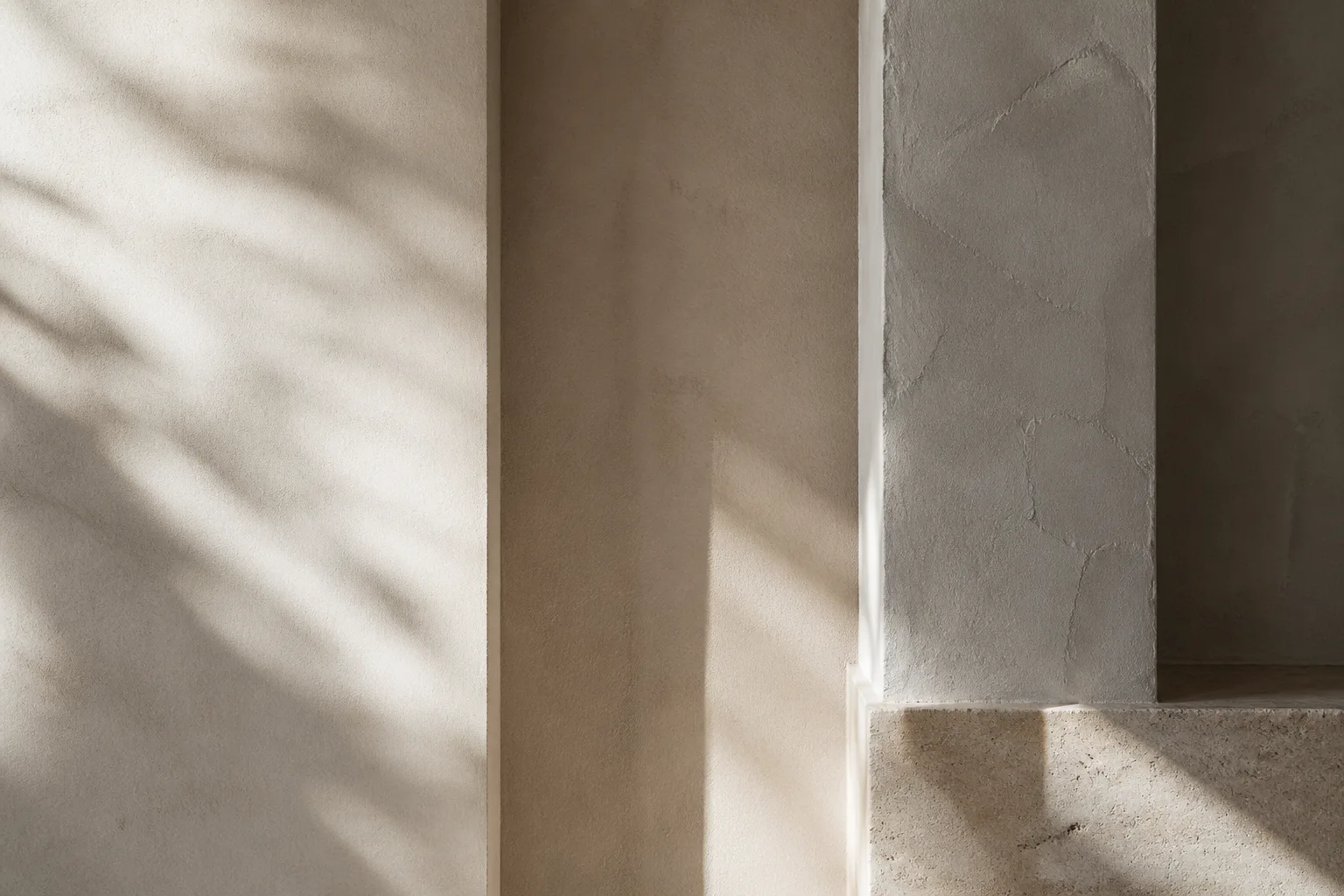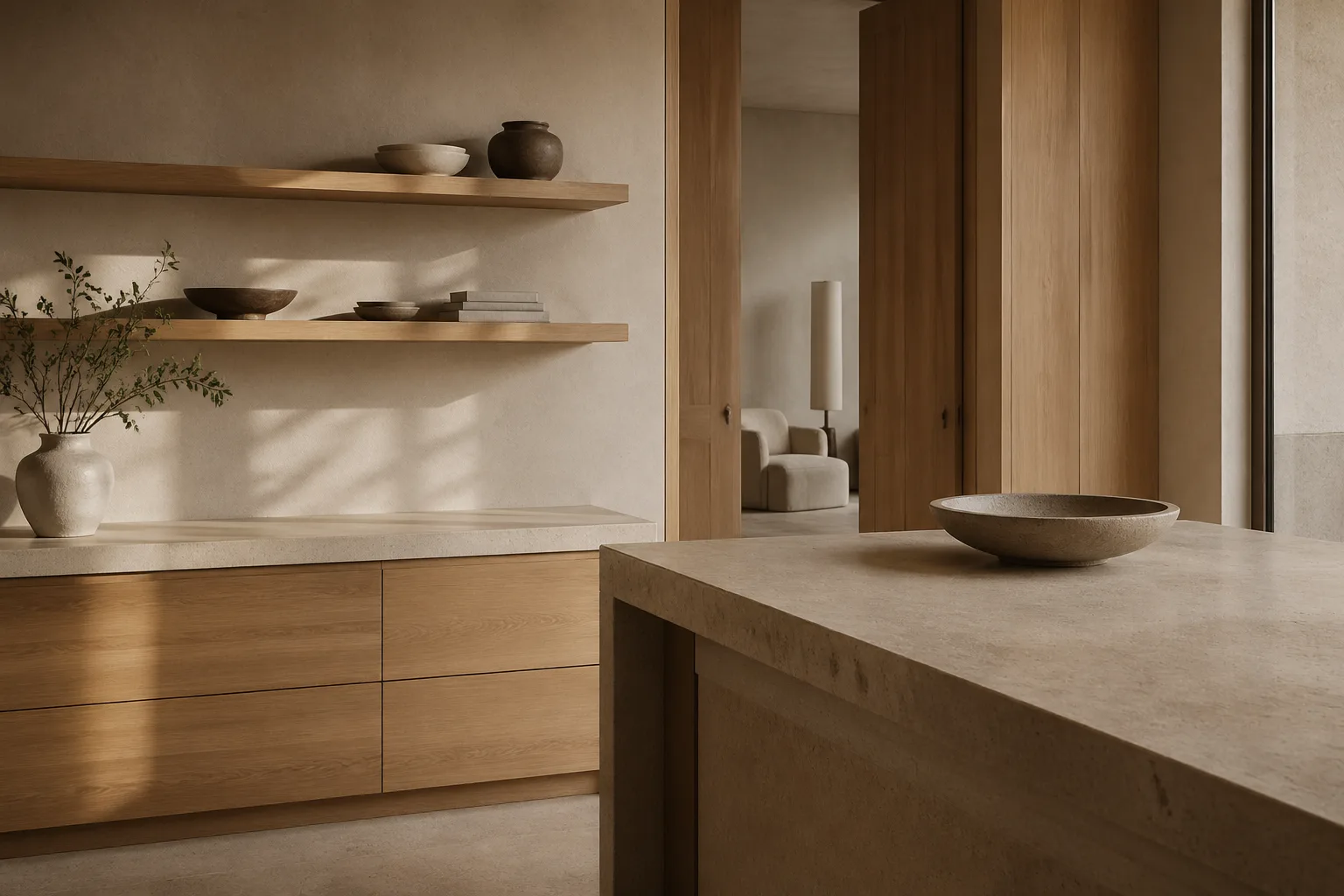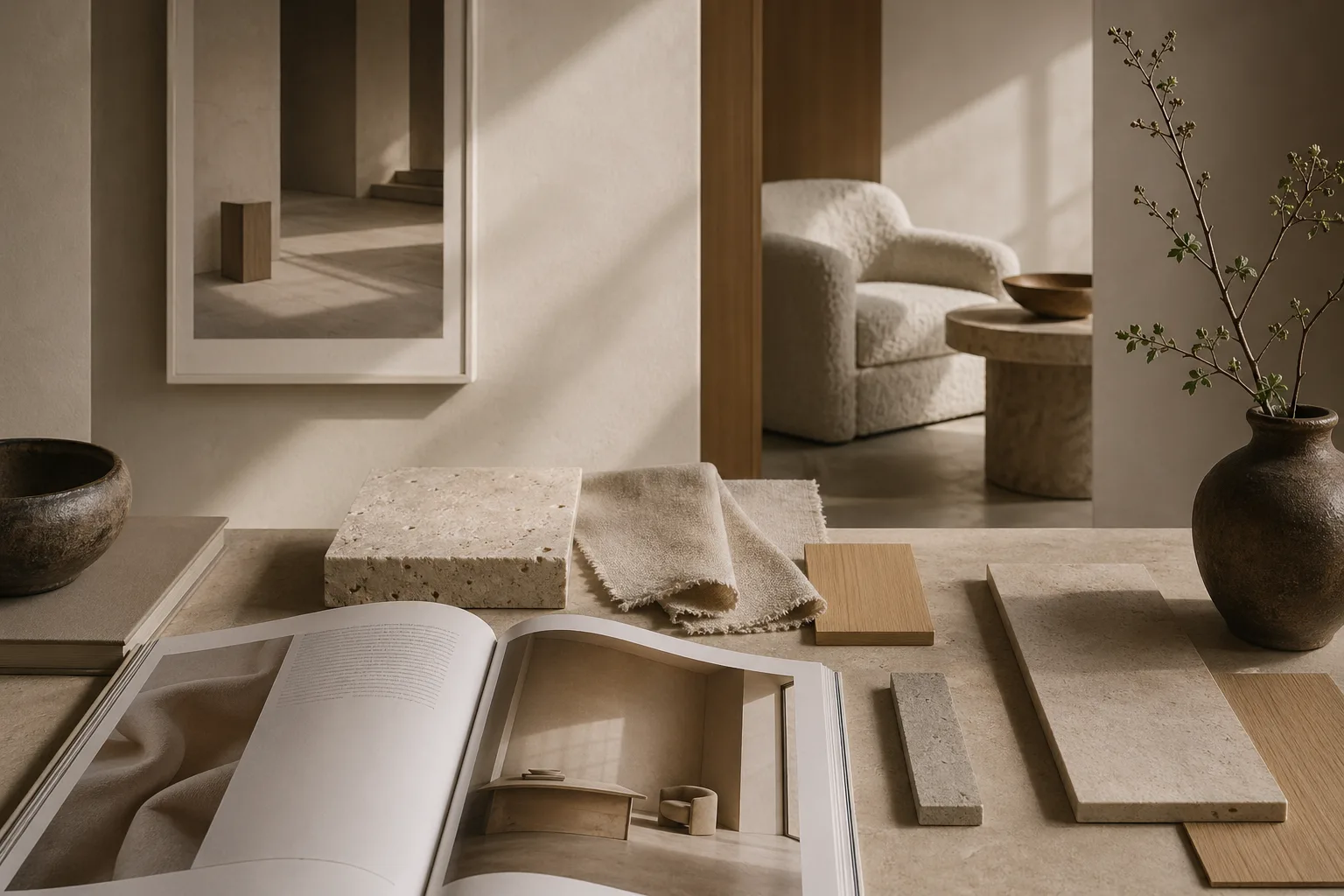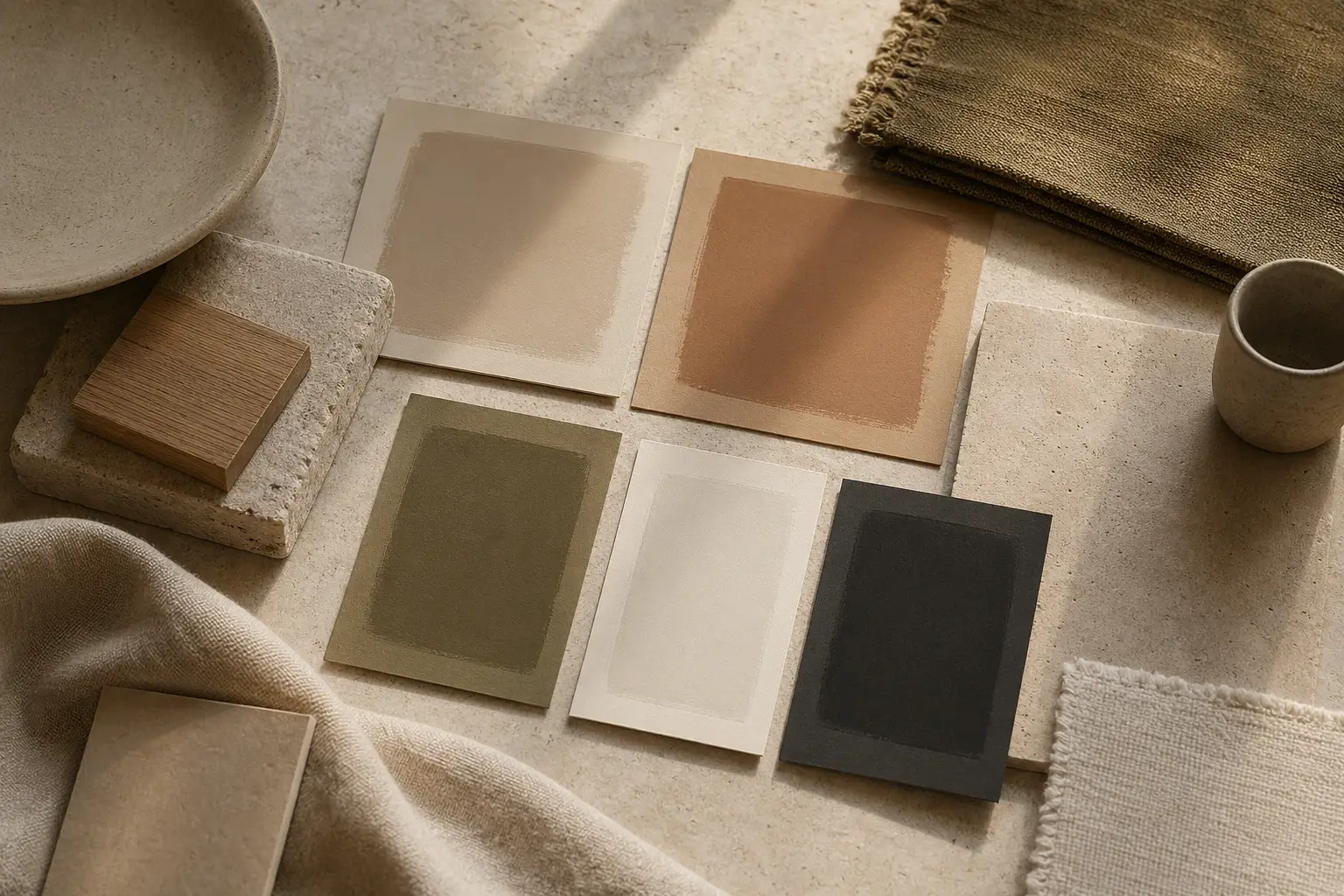
Color psychology is often oversimplified into a set of slogans: blue is calm, yellow is cheerful, green is restorative. Real spaces are more nuanced. Tone, saturation, surface finish, and neighboring materials all alter the way a color is felt. A dusty green on chalky plaster behaves very differently from the same hue on lacquer. What matters is not the color name alone, but the whole perceptual context around it.
Reading Material, Light, and Perception Together
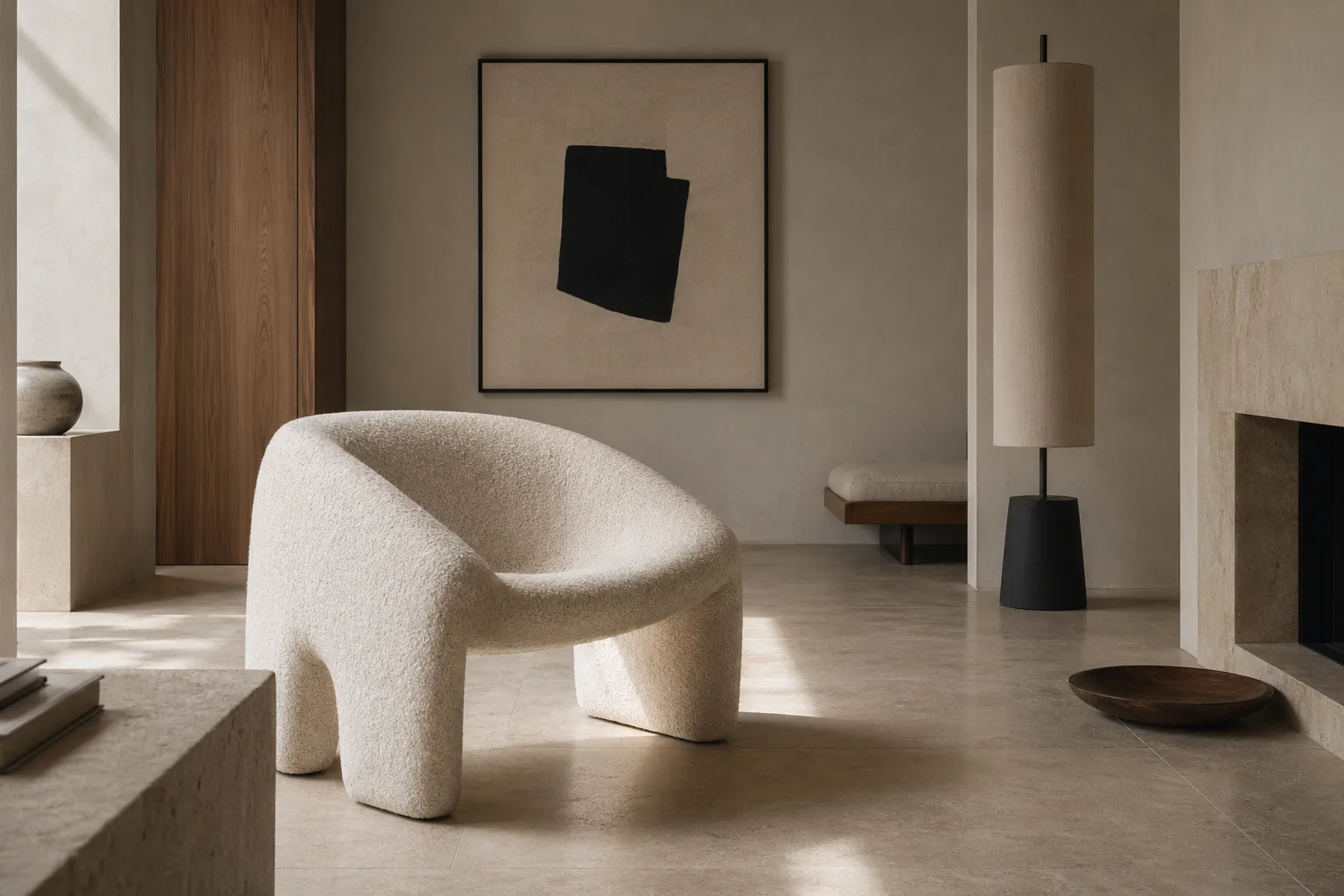
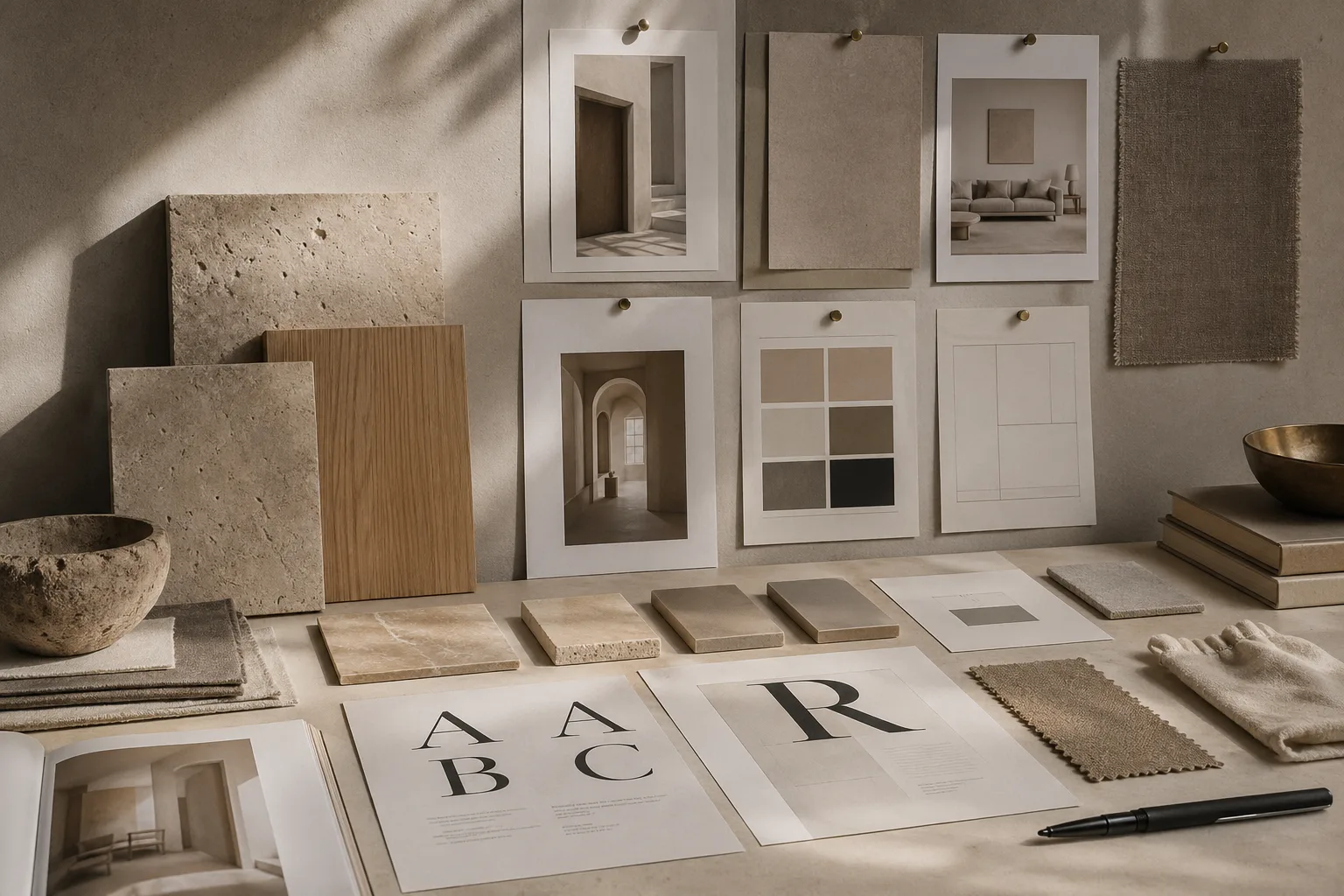
Muted palettes frequently succeed because they leave space for light and texture to participate. A room in stone, mushroom, and off-white can feel deeply expressive when the materials have enough variation. That is why surface texture and light behavior belong in every serious conversation about color. Tone without material is only half the story.
Stronger accents work best when they have a clear job. A rust chair, a dark aubergine hallway, or a deep olive built-in can anchor circulation and emotion at once. Used sparingly, color becomes an orientation tool, much like hierarchy in an editorial spread. Used everywhere, it loses rhetorical force. The same editing discipline appears in well-composed interiors and carefully paced layouts.
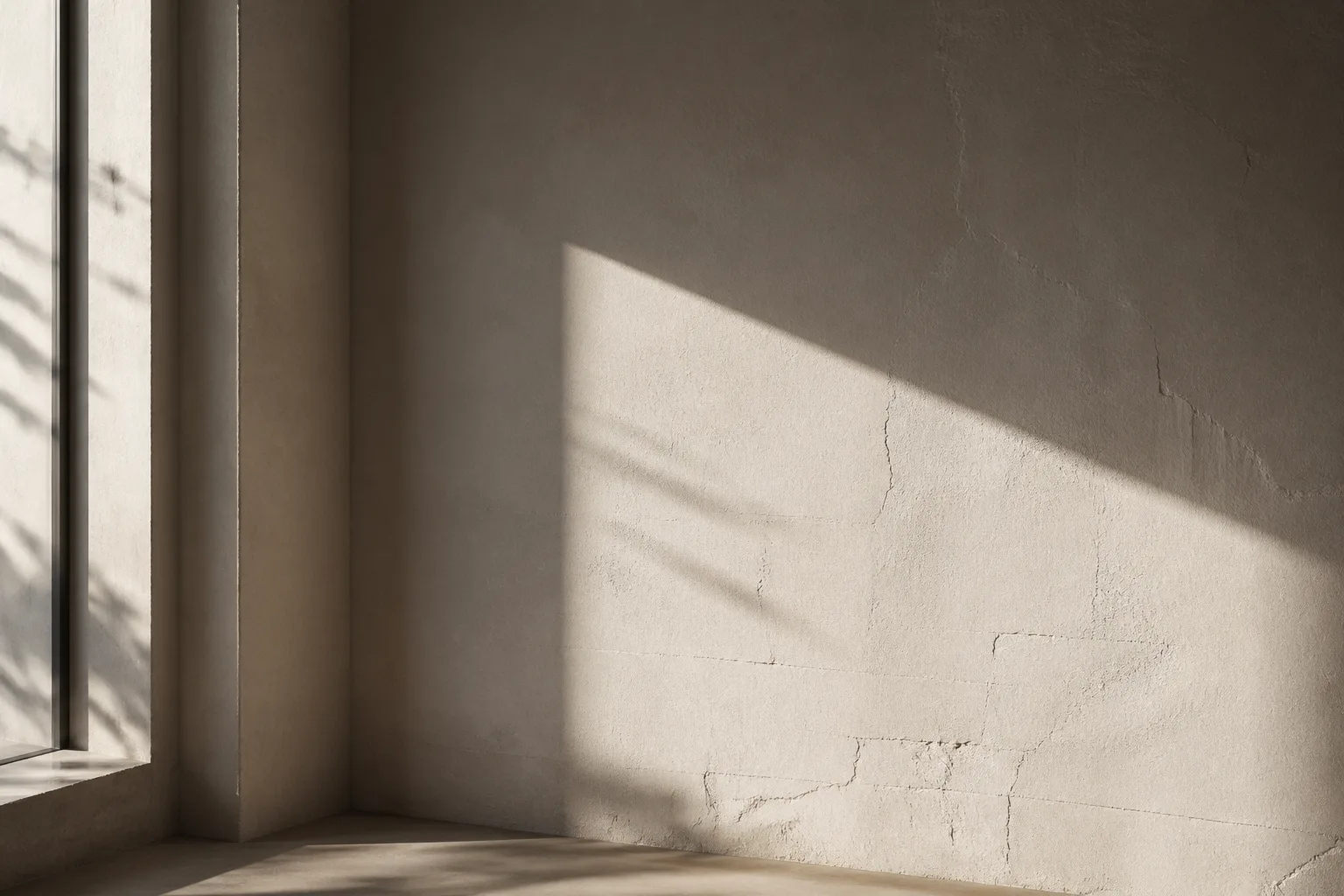
There is also a temporal dimension. Morning light may cool a room, while evening light warms it into something softer and denser. Good palettes anticipate that drift. Designers do not simply choose a swatch under showroom lighting; they consider how the room will live through the day, what shadows it casts, and how adjacent materials change its undertone.
Interior perception is also strongly affected by wall condition, moisture exposure, and surface consistency over time. In residential environments, damaged drywall and water intrusion can alter how light interacts with a room and how finishes are ultimately perceived. For readers researching practical restoration approaches, water damaged drywall repair in Irvine provides additional information about surface restoration and moisture-related wall repair work.
Color psychology, then, is less about formula and more about relationship. The most persuasive rooms are those where hue, texture, proportion, and typographic restraint all support the same emotional register.
Where to Go Next
For a broader editorial map of the site, visit the about page, browse the latest writing on the homepage, or continue with linked essays on typography, color psychology, and cross-disciplinary design continuity.